This song’s focus is on bass. The title being “serenity” is very ironic. The bass in this song is very aggressive. A constant drum beat with a high volume makes this song very upbeat, but the serene aspect of this song comes in the form of a more soft melody. This song is for trance concerts and allows the audience to dance to the long, constant heavy beat of the song. The breaks and loops of the soft melody is long enough to let the listenerget a break and rest up before the next set of drum beats get introduced.
Listening to this song with a decent sound system and subwoofer, this song’s bass is strong enough to shake the floor. However, the bass is sometimes distorted due to a low quality music file… at least that is what I heard when I listened to it at home on a set of 5.1 surround sound speakers. The song sounded very obnoxious and is nothing close to being serene. I then took the song and played it in my car during one of my car rides. When the song came up, it sounded a dozen times better than it was at home. I have 9 speakers and a sub in my car and I started to think that the song is recorded in a 5.1+ setting. As a result, the sound system at home is not capable of bringing out the full potential sound of the song.
In my car, the subwoofer was pounding as the bass beats played during the song. The melody and bass sounds were crystal clear and the vibration I got in the car was very strong. I imagine my car to be a small concert hall and the song really played well in this mini concert hall. Hearing the song in my car, the bass line is energetic and calming at the same time. When the melody hits, the calming effect reaches its maximum. When that happens, the peace of mind one experiences is what actually propels the audience to dance even harder. On a side note, the melody does still act as a breather for some people if they choose to not use the sudden surge of energy, derived from peace, to dance.
Paul Van Dyk feat. Hemstock and Jennings - Nothing but you
I have been a fan of Paul Van Dyk for a long time and this is definitely one of my favorite tracks by him. The vocal loop or the chorus of this song is surprisingly addicting. Being a song I like and such, I tried to figure out what the lyrics meant. I figured it was related to the title and it would mean something along the lines of saying that the listener is one of high value. Eventually, I found the translation to the song and it means “I don’t have anything, but I have everything when I have you.” I first thought the song was sung in German or Romanian, but according to the translation, it is in Norwegian.
I actually set this song aside and had not listened to it after about a year after its release in 2003. By accident, I deciphered the meaning of the chorus and the meaning adds the emotional aspect to the song that I really appreciate. As the lyrics suggest, it is categorized under a more romantic genre. However, a romantic trance track easily takes a spot as one of my favorites. Knowing the meaning and having that meaning go through my mind every time this track plays, this song easily takes my attention and retain for some time.
After searching random videos on youtube, I came across one video of Miles Davis and John Coltrane that inspired me to write of one of the most important part of “jazz” as we know it. This video is of the song “So What” by Miles Davis, performed live with the great saxophonist, John Coltrane. (I would recommend speakers with a good amount of bass for the full effect of the song.)
“So What” starts out with a bass melody that, in a way, calls to the rest of the band, which then responds to the bassist with their own, two note “melody”. The entire melody sequence is known as the “head” of a song. (I’ll be referring to this word numerous times.) The head is the most recognizable and concrete part of any jazz chart. A whole song commonly consists of a head, a solo/improvisation section, followed by a repeat of the head. Many other songs choose to mix up the order and throw in a few extras, but essentially this is the skeleton of any jazz tune. It’s the solo/improvisation section that I’m mainly concerned with, as of now.
Improvisation is, hands down, the most critical element of jazz that I can think of. Improvisation is what qualifies music as jazz. Improvising is much different from playing music in any other genre. In the head, a musician plays exactly what is written on his music, but in improvisation, the musician is required to “improvise” (or invent) everything he plays, which is much more difficult than being told every note to play.
A general improvisation section would normally consist of this: the rhythm section lays down a groove to give the soloist ideas to play off of, which the soloist listens to the rhythm section and creates and composes a solo of his own, right there on the spot. The bassist will give a distinct set of notes confined to the key that the song is in. The pianist will do the same, while throwing over chords that follow the same rules. The drummer will usually keep a straight beat while adding in his own short, light bursts of improvised playing. Whichever musician is soloing must listen to each one of these and listen to the guidelines they are giving for the solo that is to be played. This is necessary because a soloist simply cannot play whatever he/she feels like playing. It must be something that fits in with the song being played in order to produce a decent song.
Improvisation is so impressive because it calls upon a musician to be able to create music while the song is in motion. There is almost zero room for error, since all of it is live and happening right in the present. The musician must have a lot of experience with improvisation, a decent sized repertory of music to pull ideas from, and a lot of creativity to be a great soloist.
I posted the “So What” video because it perfectly demonstrates improvisation and how it interacts with the band and the song structure itself. The song opens with the “head”, placing a melody in the minds of the listeners, and the soloists who will call upon it later for their improvisations. Almost immediately, Miles Davis enters with his solo. He listens to the rhythm section, pulls ideas out of thin air, and produces a beautiful sound. John Coltrane follows later on with the same thing. After they are finished, the bassist sets up the head, which repeats the melody and closes the song. This is the basis of almost every jazz song you will hear.
This is another song released in the 1990s that I think is timeless because it has been about 10 years since release and it is still not boring to listen to. I guess during that time when trance was extremely popular, BT's Brian Transeau has created something quite beautiful. This is also one of those songs of the past that beats out most if not all modern releases in terms of creativity.
Listen carefully and you will find that this song is both very upbeat yet very peaceful at the same time. The highly melodic nature of this track combined with a stead drum and cymbal beat does just that. Especially the high pitched melody that sounds like a piano played underwater, those loops and solos are very blissful and happy. This song is very original and it is the first of its kind I have ever heard and it is the only song that I've heard that sounds like that aside from the remixes. Whenever I listen to this song, a shade of blue that is kind of like a neon sky blue, but much brighter appears in my mind and starts to equalize with the song (maybe it's because I have listened to this song so many times that I know the beat and how it looks like on an equalizer already). Listen to it a few more times and you will notice the wide pitch range. From high pitched underwater piano melody to the lower notes of a normal piano, "Flaming June" is one of the best trance tracks because of its broad melodic nature.
This video contains bits of the original video which are the water skiing bits. The title of the track fits perfectly with this music video. The water and winter activities in the video are probably what many of us wanted to do in the hot or flaming month of June. The intro is very relaxing because of the guitar melody leading into the body of the song. This version is very free flowing and very progressive in that the beat is continuously moving forward and not taking and breaks for other melodies except for a few drum solos that lead into another part of the song. When the basic "Flaming June" melody is playing, this song becomes very serene, but when the bass and drum beats kick in, this song becomes audacious.
After receiving comments on the last two of my "time signature" posts (see "Take Five" and "Take...Eleven?"), I realized I should post something to clean up a few miscommunications.
"Common Time" is the wording used to describe 4/4 time, and only 4/4 time. No matter how "common" a time signature might be, it is only proper to call it "common time" if it is in 4/4. This opens the question of what 3/4 and 2/4 time signatures would be called, since most people would think of those signatures as a commonly used signature. In fact, the right wording for these would be "simple" time signatures. Even 4/4 time falls under the "simple" time signature category, but seeing how the vast majority of the songs in this world are in 4/4, it's given its own distinguishing name of its own.
All of the other times are the ones that I focused on in my past two posts. These times (5/4, 7/8, 43/62, etc.) are classified as "complex" times. These are the very interesting ones that either require lots of practice from a musician working within its boundaries, or call upon a unique (and quite genius) beat or groove that allows both the musician and the listener to feel the time subconsciously.
Also, in response to a question, the Dave Brubeck Quartet released an album titled "Time Out", which was an album devoted to complex time signatures. In fact, "Time Out" is the album that contains the hit song "Take Five", which was the focus of my post with that respective title. A lot of credit goes to this album, it contains a lot of groundbreaking works that have changed the music industry as we know it. I would highly recommend listening to this album.
Hopefully this cleared up a bit of confusion about time signatures. Good luck with the listening! Be sure to keep looking for complex time signatures in songs you regularly listen to.
When you go driving in your car, do you ever find yourself wondering, "What can I do to bother everybody who passes me?" Me too! So I've come up with a perfect solution that works every time.
One thing you can do to be obnoxious is to be an aggressive driver. But nobody really wants to be an aggressive driver, which means we have to find a different way to achieve this. And what better way to turn someone into an involuntarily aggressive driver than with loud, angry music? Bonus points for listening to music that offends others' ears, both with lyrics and volume (more bonus points for giant subwoofers)!
So, to help you all get in touch with that angry driver inside you, I present this playlist of intoxicatingly malicious music. Enjoy it while you can, which is until your car insurance starts costing more.
Drive Happy 1. Du Hast - Rammstein This is a delicious song, it is full of anger and Deutsch. It gets started about 15 seconds in, which is just long enough for you to pull out of the driveway. You still might have to drive a little aggressively to get on the road before it starts, though.
2. Dragula (Si Non Oscillas, Noli Tintinnare Mix) - Rob Zombie Don't be fooled by the foreign-looking text in the title, this little number is really American-Made Music to Strip by. That's the title of the album, anyway. The lyrics don't necessarily make sense, but there's lots of anger: it's a perfect addition to this mix.
3. I Love My Sex - Benny Benassi And who doesn't? No, not a trick question: old people don't love your sex, instead it will bother them as you whiz by. Some fast, edgy electro, this track is certain to get your car and your heart going faster. Plus, more than enough bass to bother everyone around. 4. Faster Kill Pussycat - Paul Oakenfold feat. Brittany Murphy Some more sexually-oriented music for your driving pleasure. Similar sound, slightly more sophisticated in taste. Might make you think you have lucky eyes, causing egotism and road rage.
5. You'll Be Under My Wheels - The Prodigy Great sentiments here for driving! How can you not drive aggressively if you're contemplating running people over? The lyrics are, "I rock," and, "I roll," so your in-car egotism is further bolstered.
6. Spitfire - The Prodigy Downshift when you really shouldn't, and you might get your car to spit fire: aggressive driving becomes more obnoxious when it's actually stupid! The Prodigy makes good driving songs that make you feel bamfy, and are best played loud. Spitfire is no exception.
7. Gunner Down - Leslie Spitzer, Brad Cross Yes, this comes from the Descent II soundtrack. Some industrial electronic stuff with lots of overdriven guitars, this helps you think of killing robots, and other vehicles on the roadway are basically robots. At the same time, it's a delightful segue into the next couple of songs, which are angry metal.
8. 2 x 4 - Metallica When driving aggressively, it may help some to envision beating people in the face with a two-by-four. This is the original stuff that made our elders say we youngsters are all going to hell. Try singing along, and giving people angry looks as you say, "Make my day."
9. Last - Nine Inch Nails Angry music, with lyrics about sex and instant gratification. Screaming people, electric guitars with lots of distortion, and a regular 4/4 kick for much of the song: anger, check. It also takes a subtle lyric from 2 x 4 and shares a riff with Gunner Down, so I had to put it in here.
10. Techno Industry - Johann Langlie (Also from Descent II) Industrial doesn't get much more industrial than this. It's a helpful song when you want to envision the other cars being rent and twisted in your wake.
11. Crawl - Brian Luzietti This here's a slow, brooding... crawling song. But when it's through, you'll have pent-up anger, which is the best kind for bothering people on the road. You need to hate people without reason, and this song will help you do that. More importantly, it prepares you to release the anger with a stomp on the gas pedal during the next song.
12. Bidibodi Bidibu - Bubbles Remember in Super Troopers, wenn die Deutschen go schpeeding by in der Porsche, blasting der German technomusik? This is de song zey are blasting, ja. In the world of driving out of control to loud music, the slogan is, "Crazy German techno: there is no substitute." Don't forget to crank the volume, especially at stoplights. Have fun with your new hobby!
Remember, kids: illegal things are illegal. This means you need to stay under the speed limit, stop at any official red things, and not discharge firearms from within a moving vehicle.
This was released about 2 weeks ago by Coki from Digital Mystikz, a dubstep due based in UK. Coki and his partner Mala host a dubstep nighclub held at the Mass club complex in Brixton, London. Dubstep is growing, and these guys are in the center of it. I was never big on the Grime/Dubstep genre until I heard side A Spongebob. This is off the chain.
There's good songs, epics, and then "tools". Its almost like its not even considered a song; every single element of this song, the tempo, the frequency, the body, the bass, and so on are all so perfectly atune to the point where its brainwashes the listiner. Honesly, from my perspective, there is no way not to dance to to this, let alone go all out. It digs way too deep into your instinctive side; deep into your subconscious.
Im playing a show in NWI this thursday, and Spongebob is going to be the highest point of the night. Ill slowly grind and start to build then finally cut all the lights and let the fog machine go full blast. Then ill dig this machine from the depths and drive people out of their minds.
As I mentioned in my earlier post, Take Five was one of the most unique and recognized songs in the jazz repertoire, mainly because of it’s awkward 5/4 time signature. You may or may not realize it, but Take Five isn’t the only well-known song with an time outside of the well known “common time”, or 4/4 time. As an echo to my previous post, this post desensitizes the idea of an uncommon time signature in our popular music realm, rather than focusing on one single song. A quick briefing on time signatures! A time signature is a notation that helps a musician to read music by specifying how many beats go into a measure (the top number) and the value of a note (the bottom number) as a fraction. More often than not, a song will be in common time, where 4 beats are in a measure. However, on the rare occasion that this isn’t the case, as long as the composer is talented enough, an amazing song is produced with one of the strangest, yet genius, grooves possible.
In 1959, Paul Desmond and the Dave Brubeck Quartet released “Take Five” along with an introduction to the uncommon time signature. Before then, the United States had hardly even touched on the idea of straying from 4/4 time. All of this was the focus of my last post. What I left out was that the Dave Brubeck Quartet later released a song titled “Blue Rondo à la Turk”. Blue Rondo wasn’t created in 5/4 time, like “Take Five” was. It was created in 9/4. This means that each measure would be counted 1, 2, 3, 4, 5, 6, 7, 8, 9! Counting in groups of nine isn’t something that the subconscious mind can easily do, especially when it’s focusing on playing and improvising, as all jazz musicians are required to do. Just because it’s interesting: They actually count 9/4 as 1, 2, 1, 2, 1, 2, 1, 2, 3, rather than 1 – 9. This allows them to be able to count subconsciously and worry about the music they are playing, rather than where the actual beat is. Oh, and to make the song even more difficult, they decided that once into the song, they’d alternate between 9/4 and 4/4 time. It almost sounds impossible, but it actually comes together in an incredible display of music.
Most likely inspired by the Dave Brubeck Quartet, from 1959 and on, songs utilizing awkward time signatures started sprouting up all over the place. They’ve even found their way into songs that we hear on a daily basis, but most don’t realize what it is that makes them so unusual. The most popular of all of these songs is the theme from “Mission: Impossible”. I’m assuming everybody has heard this song. Duh duh, DUH DUH, etc. The “Mission: Impossible” theme is in 5/4 time, yet this doesn’t prevent the song from creating an amazing groove beat that’s been known by the majority of the nation since its existence.
Pink Floyd’s most popular tune, “Money”, is also one of the most popular songs with an uncommon time signature. “Money” is in a very unusual 7/8 time, which can be awkward, seeing how it’s only one beat short of being 8/8 (which really is 4/4). However, if you just listen to the song how it was meant to be listened to, without worrying about what time signature it’s in and how to count it, the song makes perfect sense. It grooves hard, it sounds amazing, and the members of Pink Floyd all play their part to make it a memorable song.
Fans of Radiohead, Tool, Yes, and The Mars Volta (my all-time favorite band) might also recognize different time signatures. All three of these bands love to mix and match both new and old time signatures to create some of the most genius work I have ever heard in my life. This is blatant opinion, but I’m not alone on this one. I’ll definitely be talking about The Mars Volta later on, but for now I’d like you to listen to a sample of one of their songs. Warning: This song is not for the weak, it's insane.“Cygnus…Vismund Cygnus” contains 4/4, 4/8, 5/8, 6/8, 10/4,9/16, 6/8, 2/4, and 23/8 time signatures. That is absolutely incredible for one song. I don’ expect anyone to be able to identify any of these times in the song, but I’d like to demonstrate what a band can do with all these time signatures that I’ve been talking about.
Other well-known songs with uncommon times are “YYZ” and “Freewill” by Rush, “The Sound of Muzak” by Porcupine Tree, and “The Ocean” by Led Zeppelin. Next time you’re listening to a song, try counting with the beat and see if it would make sense to count in 4. If not, perhaps you’ve found one of these incredible songs!
In last weeks post "Uh oh...", I talked about what happened to my car and what happened as I dodged a deer and went into a tree. Instead of making a post of what simply happened, I gave some detail on what songs were playing when the incident happened since this is a music blog and all...
I think it is a huge coincidence that I'm blogging on a music blog and listening to Fergie's "Big Girls Don't Cry" as I wrecked my car. I had an inkling that there was more to my previous post, but I decided not to do anything more until I was told that there was really something more. After some time spent thinking about it... here is my conclusion of that event.
The fact that "Big Girls Don't Cry" was playing was to some extent ironic. The song is about having to leave someone (or something in this case) that you really love. However, you don't want to just leave and let go, but you can't do anything about it because it has already happened and you know it. It is time to face the facts, it's over. O well... I'm going to miss my car "like a child misses their blanket", "but I've got to get a move on with my life." It certainly will be hard to move onto a new car, but like the song suggests... I should take the opportunity and see what else is out there. Maybe I'll find something better, but it wasn't the cars fault that I wrecked it.
"It's time to be a big girl now And big girls don't cry..."
Although you might have heard it 50 times today, here is the song if you are interested...
This is called "My Vision" By Jakatta featuring Seal. This song dates back to 2002 when it was associated with being timeless because it is one of those songs you can play at a dance floor many years after the production and it is still not old or boring. The sleek and simple piano melody combined with the gentle voice of an RnB artist makes this track very stylish.
This is a very chilled out song and laid back dance song or just a normal song to listen to to relax. It is very laid back because of the slow tempo and allows a person to either cool down from the blissful dance vibe or to recover from a stressful day. For the duration of the song, the listener should feel very light and free due to the piano mixed with a mellow beat. In addition, the lyrics are very reassuring and are sung by a very soothing voice that has that soul touching element. From the sound of it, the piano piece by itself would be very slow and would be a very depressing song by itself. However, anything that is somber by itself is immediately transformed into something upbeat and joyful when it is tranced up.
Whenever RnB is merged with trance, the result is generally very satisfying. I believe it is that melodic element and simple, yet catchy beat of trance that creates an upbeat feeling which adds to RnB, consisting of blues and jazzy elements.
In the video, various elements make it very emotional and lively. One of them is the shots of Seal singing. You can see his facial expressions that show that he is really into the moment while singing the song. Everyone have the natural tendency to associate with the feelings and opinions of others, as a result; the viewer and listener takes on the mood of the video, which is very soulful, yet laid back.
This is a song by Gouryella called Ligaya (2002), one of many trance tracks created almost 5 to 7 years ago. The cool thing about this music video is that it gives an idea of what people see the digital and futuristic as.
Let's focus on the music and the concept of a digital word where anything is possible, your imagination is the limit. Listening to trance, everyone tends to temporarily dive into their own imaginary world that is also a place of sanctuary. For the length of the track, the person feels relieved and unattached to the real world. How? The long string melodies and the wavy hoovering sounds along with a very strong and heavy beat characterizes this track. This track is categorized under dream house which is categorized by very dreamy elements which consist of repeating string-like melodies or piano melodies. Combined with images of a depicted digital world and hoovering elements in the video, the audience really feels some relief. There is some comfort achieved from the mysterious elements that are constantly moving in the video because it keeps everything going. Most of the time, a negative mood is imposed by the lack of ability to keep moving ahead, but this video delivers nothing but happiness by propelling the viewer forward by having constant movements that match the hovering sound and beat in the background.
There is also an uplifting aspect to this video. The listener should be absorbed in the video and the song is arranged and created so that the build up to the climax is subtle and unimportant. When it finally hits you, happiness and bliss is thrown in your face. This is actually one of few songs I can listen to when I'm blue and make me into a more joyful mood. This song is very harmonious and mellow. I would consider this one of the best trance songs of all time because it conveys a lot of dream-like emotions that enlivens its audience.
Here is a remix.
This is an alternative version or the remix to 'Ligaya' as you can tell. In general, a remix consists of added elements such as more beats, different sounds using different instruments, and a change in the tempo, pitch, or volume of the song. In this remix of 'Ligaya' the intro has added elements such as loops of drum beats and hovering sounds that fades into the melody of the original song but the instrument sound is different. An addition to the original is that there are some string-like melodies that are played in sets of fives which is quite catchy. The original song was already very melodic, but this song is even more tuneful. Another addition is that there is a cymbal crash every time the melody loops in the body that gives the illusion of the volume increasing every time the melody repeats.
Remix or not, both of these songs bring joy and happiness to the listener despite the listener's former mood because there is a great chance that you will end up happy after you are done with the song.
“Take Five” is one of the most well-known songs in the history of jazz music. In 1959, the Dave Brubeck Quartet released “Time Out”, an amazing album with “Take Five” as its most popular song. There isn’t one single reason why “Take Five” became so popular, but rather there are many. It required the collaborative talents of all four members of the quartet to create such a great flowing song. Dave Brubeck brought his expertise with the piano. Paul Desmond produced his amazing saxophone sound, along with his composition talents in writing the song. Gene Wright provided an excellent bass backbeat. Joe Morello brought his amazing talents on the drum set to give the song exactly what it needed. All of these elements were in full force in producing this song.
Here’s an old video of the song performed live. I preferred a video over an mp3 because I wanted to “show” you why this band is so exceptionally talented. I’ll talk about the details after the video. First, watch it, see what you think, and try to pick out what you think makes this song so different from any other jazz chart.
First of all, the saxophone melody is very catchy. It’s something that makes you want to sing along before you have even heard the song all the way through. The other thing about the melody is that the saxophonist, Paul Desmond, is able to produce an incredibly clear tone. Every note he hits is exactly where it should be. This allows the melody to come out with a much stronger impact than if another musician were to play it. It also evokes a more powerful emotional response by having a more “beautiful” tone.
Besides the catchy melody, there’s something else that’s even more distinct (and famous) about this song. Have you noticed it yet? It’s in 5/4 time! (Which is the cause for the title) For those who don’t understand time signatures, that means that there are 5 beats in a measure. Most of the songs in the world are in 4/4 time, meaning that there are 4 beats for every measure. If you were to count the beats to a song (go ahead and try this if you are new) it would be 1, 2, 3, 4, | 1, 2, 3, 4, | 1, 2, 3, 4 etc. However, in “Take Five”, the song would be counted 1, 2, 3, 4, 5, | 1, 2, 3, 4, 5, | 1, 2, 3, 4, 5 etc. This isn’t easy at all for a musician. The subconscious mind always wants to count in 4/4, since that’s the way they were taught and have been used to. It takes a lot more concentration and practice to be able to play a song in 5. That’s what makes this song unique.
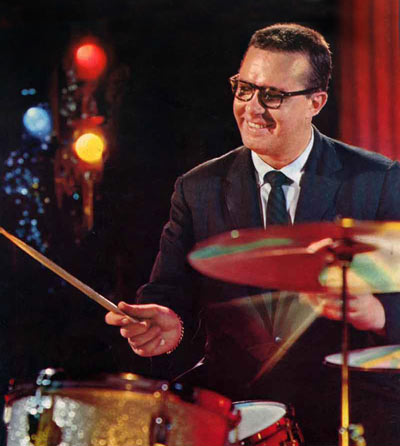
Another distinct, and amazing, part of “Take Five” is in the works of the drummer, Joe Morello. Soloing is not an easy art to master, but Joe Morello was able to take it beyond mastery. Being able to invent rhythms and beats on the spot takes a lot of experience, background, and talent with any instrument in music. Morello somehow did all of this, in a 5/4 time signature. This means that he has just as much experience, background, and talent in a 5/4 signature as most great drummers do with the common 4/4 time.
Joe Morello isn’t considered an amazing drummer just because he’s able to play and solo in 5/4 time, though. He’s recognized because of his style as well. This is where the video comes in to play. Watch the drummer during his solo. He hardly seems phased by what he’s doing; he looks like he’s played the solo millions and millions of times before. Also, his arms are so “loose” in the sense that he doesn’t force anything out. It’s as if the rhythms he’s producing are coming naturally to him. This is what separates a lot of great drummers from the ones who have something to learn. Morello proves his experience and talent to us just by using his body language. It's truly amazing, if you ask me.
Watch the other three members of the quartet as well. Brubeck and Wright’s beats are incredibly solid. They know exactly where the beat is (even if it’s not in 4/4) and they hit all the notes as they should be played. The saxophonist is a lot like the drummer. As he enters in the song, introducing the melody to the audience, his fingers move along the saxophone as if what he’s playing is a breeze. He looks like he could do it in his sleep. Combine this with his already amazing tone and sound, and you get a great musician.
All of the musicians provide equally important elements to the song. Without Paul Desmond’s amazing saxophone work and genius melody, the song wouldn’t have gone where it has gone today. Without Dave Brubeck and Gene Wright provide a solid, catchy beat, the song would have crashed and burned. Lastly, without the amazing drumming provided by Joe Morello on the drums, the song would not display as much talent as it needed to in order to make it. “Take Five” by the Dave Brubeck Quartet is a true display of musicianship and what can be produced when four amazing players come together to form one sound.
This style of trance is not extremely popular nowadays, but many uplifting trance and energy trance tracks today are starting to bring back the style. This type of trance existed about 7 to 9 years ago and was slowly unpopularized as break beats and other types of techno were introduced.
This was the song I was listening to as I dodged a deer, went into the dirt, lost control of my car, and plowed into a tree. At the 2:44 mark of this song, Sean Kingston sings, " What should I do? I'm missing you and I feel so down. Now that you're gone I can't go on this must be the end". This was also the part that was playing as I gained some consciousness as my car sat on its side. The thought "What should I do... this must be the end" was floating in and out of my mind at that point.
The car stereo still works and the next song on the playlist is actually "Just Dreaming" by DJ Bigkid. This song with some other motivators allowed me to get a grip and climb to the back seat and exit the fuming vehicle. I made a post last week on "Just Dreaming". This experience really shows how songs can be motivating and uplifting enough to let you get a grip in the worst situations. The combination of strings, piano, and xylophone never fails to calm a person's mind.
DJ Loopy Volume J Sky High
Tracklist: 01. DJ Loopy - Intro (Loopy) 02. DJ Loopy - Islands (Loopy) 03. DJ Loopy - Take Control (Loopy & Stud) 04. DJ Loopy - Someone (Stevie So Fly) 05. DJ Loopy - Castles (Loopy & Stud) 06. DJ Loopy - Out Of Love (Filet MigNAM) 07. DJ Loopy - Drowning (Slim Tim & Fos ft Loopy) 08. DJ Loopy - Follow Me (Farm) 09. DJ Loopy - It's A Dream (Fos ft Slim Tim) 10. DJ Loopy - Rain (Loopy) 11. DJ Loopy - I Found Peace (Loopy) 12. DJ Loopy - So Long (Loopy) 13. DJ Loopy - The Way I Are (Loopy) 14. DJ Loopy - Is It Love (Loopy) 15. DJ Loopy - Desperate Religion (Loopy & Trippy)
Two tracks that I think are the best in this album:
Track 9 (Listen here): The constant xylophone ambient beat and the ambient during the breaks or short solos cause this trance-like, outer space feeling. Like the title suggests, it is kind of like a dream. Most of the time, when a title contains the word "dream", you can expect a very relaxed vibe in the song and very laid back. This track kept most of the original sounds and remixed some of the beats and ambients, but to keep the original sound of the vocals is highly respected because the DJ must then mix the beats and ambient to suit the vocals.
Track 14 (Listen here): The beat, tempo, ambients, and vocals create a very smooth song. The arrangement and clear sounds makes the track sound very fluid. At the middle of the song when the melody and bass has a volume increase, the vocals are gone so that it is not drowned out by the ambients and melody. After the quick melody and ambient break or solo, the vocals are introduced again, but the volume of the vocal is also increased to match that of the melody so nothing is drowned out. Most of the time when a DJ increases volume, the sound quality starts to get distorted, but DJ Loopy does a great job of equalizing everything so everything is balanced and results in a high quality track.
Overall, this album has very high quality sounds, no vocal is drowned out by the bass and melody. The arrangement to each song reflects a lot of effort to make the album sound clear and smooth. The happiest song in this album is Track 6 - Out of Love. When a song uses many high pitched sounds, including the vocals, the song tends to turn out to be a very festive and happy song. A con to this song is that, everything being happy makes understanding the track as a whole a very painstaking process. You will need to either just focus on the vocals or the melody one at a time to understand clearly what is sung.
The melody and vocals of this album being as good as they are is really a bonus to the main focus of the album. I've noticed that every track have a very clear bass line that is nicely matched with the surround sound effect. I'm not too familiar with the genre "beat", but that is what this album is categorized as. The beat consisting of mostly bass... I believe my statement about the focus being on bass is correct. Clear melody, clear vocals, and fluid yet changing beats make this an excellent album. This would be a 9 out of 10 on my scale because nothing ever gets boring due to changing beats and fun melodies. This album also contains tracks that are relaxing yet happy at the same time and some gives a space like, dreaming feeling. Also, I'm a big fan of clear vocals and smooth transitions from song to song that makes listening to the album enjoyable since it feels like one big song. A smooth transition from a relaxing song to a hyper happy song is very hard to do due to tempo and beat differences. The outro of a former song must be slowed or sped up and silenced to match the intro of the next. This sounds easy to do, but it is difficult. Just imagine trying to transition an opera song into a hip hop song.
You know what's tragic? Ask someone if they like Daft Punk and you might find out. The problem is certainly not that you'd get a no, it's that they probably don't even hardly recognize the name. If you're one of those people, then this post is for you.
But don't let me get too far into why Daft Punk is freaking awesome just yet, let's start far away and close in on the good stuff. That's not to say our Billboard Hot 100 chart-topper du jour isn't good stuff...
That's right, you've all heard it, most of you liked it, and a few of you undoubtedly were compelled to dance to it: Stronger by Kanye West. It's a song with a good beat, reasonable lyrics when compared to other hippity-hop (Soulja Boy is such a tragedy... please do not superman your hoes), and most importantly heavy sampling of Daft Punk's song, Harder Better Faster Stronger.
So if Stronger got you dancing, it stands to reason that with a title four times as long, Harder Better Faster Stronger would get you on the floor and out the roof. Here's a piece of the original. Clearly a song carrying different emotions, relying almost entirely on musical merit rather than lyrical.
Now, to mention Harder Better Faster Stronger and not mention that it samples another song itself might be a little mean. Cola Bottle Baby, by Edwin Birdsong, is the origin of some background that you mainly hear at the beginning. Daft Punk just did what Kanye later did to their song: they used a part of Cola Bottle Baby and remixed it into their own stuff to make it sound awesome.
I'm going to be writing about Daft Punk a lot in the next couple of weeks, and so I might have to reference the following video a few more times. It's just some examples of Daft Punk songs and clips of the songs whence the main samples came, and since Daft Punk does a lot of sampling of various songs made since the advent of synthesizers in funk, there's a lot of samples to speak of.
The guitar is one of the most unique instruments because of its incredible diversity.If there is a genre of music, there’s most likely a specific guitar style to fit perfectly with it.The reason behind this is that the guitar is a hybrid instrument.It combines the quality of a “natural” instrument with the power of computers and technology.I stretch to use the word “natural” to define an instrument, because all instruments are essentially manmade tools.However, when comparing digitized music and sounds to instruments utilized by humans themselves, “natural” seems to fit in quite well.
Guitars can connect to amplifiers, which are simply large boxes that take the sound of the guitar and make it louder, or “amplify” it.Since this sound must first be translated to an electrical signal and sent through a wire to the amplifier, computers (and pedals) are able to alter the sound.This is where the digital world combines with the natural world.Once the sound is converted to a signal, it can be bent, pulled, twisted, and reshaped to create any sound the artist wants.It is even possible to mimic that of a completely different instrument.This creates infinitely many possibilities for tones and styles to be created with the guitar, and it’s this reason that the guitar’s diversity can fit in with any genre of music.
As I said earlier, each genre has its own style.Basically, a genre defines a set of boundaries that the tone produced from the guitar must fit in to.Heavy rock songs usually distort the signals to produce fuzzy, crackly, screaming tones, which are perfect for the loud and hard tendencies of rock music.Funk songs require an entirely different tonality.In your mind, try to think of any funk song.More likely than not, you’re thinking of an upbeat, clean, “wah” type of guitar sound.The sound comes out as smooth (or clean of crackling and fuzz) and usually intentionally wavers from the desired note.
Believe it or not, jazz has its own standards for guitar as well.When most people think of jazz, they don’t even hesitate to remove the guitar from the overall sound.This is probably because the most popular jazz hits don’t FEATURE the guitar, but just because the guitar isn’t featured, that doesn’t mean the guitar doesn’t play a critical role in the group’s mix.In jazz, rhythm is the key component.A guitarist is recurrently found laying down the time along with the bassist and the drummer.The good guitarists are the ones who are able to venture out from the simple time, create improvised rhythms, and still maintain a solid sense of the beat.
Now I suppose you want to know who these “good guitarists” are.In my opinion, one of the greatest guitarists of all time is Pat Metheny, the front man of the “Pat Metheny Group”.He created one of the most unique and distinct sounds in all of jazz guitar history.Imagine what it would sound like if Carlos Santana was born in New Orleans and produced records in the 40s with the biggest jazz giants of the time.That’s what Pat Metheny sounds like.I’m assuming everyone knows of Santana.His songs have instantly recognizable, no matter who is singing.Santana usually finds popular singers to lead them on a single hit, while Carlos accompanies them with his distinct guitar tone and style.As soon as he starts playing, simply because of the specific recognizable way the sound is altered, Santana can be identified with whoever he plays with.
Pat Metheny provides the same amount of recognition with the sound that he produces.The only difference is that Santana and Metheny are working with two completely different genres, yet somehow they both manage to produce the distinct, amazing sounds that they do.Out of all of the songs I have on my iPod, as soon as the guitar starts playing on a Metheny chart, I instantly know what I’m listening to (I tend to throw my iPod on shuffle and see what it spits out at me).
Besides the distinct sound Metheny can produce, he also accomplishes a few more outstanding things.Distinctness isn’t everything.The noise from a dying cat can be considered distinct, but in no way does the awful sound qualify as decent music.Metheny is able to form the most creative solos out of nowhere, while maintaining a sense of rhythm within the band.He successfully manages to act as the rhythm section and metronome of the band, while being the leader and front man of the entire band.
Word hardly imply anything when describing music, unless the reader has a trained background in the field.Therefore I found a couple videos that demonstrate what I mean with Pat Metheny and his group:
This video displays Metheny’s incredible ability to lead his group, while still providing the pulse required to keep the song alive. Not only does it show that, but it shows how amazing of a player he really is:
This one immediately sets a groove with Pat acting as the rhythm section, giving 8th note clicks on his guitar with a catchy rhythm.This allows the rest of the band to ease into the song, and it gives the keyboardist space to add his intro solos leading up to Metheny’s real entrance at about 3:45.Don’t mind the large hair, if it’s really that bad, just close your eyes: http://www.youtube.com/watch?v=zn3zIBBmXiU
Hopefully you’ve been able to pick up on the ingenuity of Metheny’s playing, along with his amazing ability with improvisation.If not, then you probably can’t even tell the difference between this and this.
Very rare Brazillian Bossa. Got the samples from Sabadabada a few years back. The trio did two records, Casa De Bamba in the 70's and Ritmo...Bossa...Balanco in 1965. Sorry, Its really really hard to find info about them. I will try to ask Saba for info in the near future.
Floor filler. Released in 05 and still on top. Tight beat and awsome vocals by Delline Bass. Does the main orchistral sample sound familiar? You might have heard it in the movie Road To Perdition.
Just released intense beat by one of the members of Deep Dish. This will probably be one of the biggest club hits of the year. Catchy 808 drums and resonated hits and stabs sounds like jingling bones and are apparently driving clubs crazy. RibCage at Womb, Tokyo. I rest my case.
Pryda - "Muranyi" For those that dont already know , Pryda is Eric Prydz record label. Nothing huge, but the synth line is catchy. I used to be a huge fan of Cirez D, another alias of Prydz, with some fresh house beats, but lately it seems like he has been producing too much, and I just hope he doesnt dry out. Apparently the record getting alot of attention from Carl Cox and Sasha, and other mainstream DJ's.
Some seriously fresh Drum and Bass from Hospital records. High Contrast just wont dry out. I Honestly dont understand how he doesnt run out of samples. I cought on with Racing Green about 2 years ago and have been hooked ever since. The vocals are from Diane Charlemagne, if your wondering.
Another great remix by Carl Crag, a producer based in Detroit. His style is very minimal in all of his remixes. He is also bringing back the deep deep kick that he used in his In The Tree's remix. In The Tree'sjust so happens to be Juno.co.uk 's best selling record of all time. Maybe this one will do good aswell.
Just decided to give you guys an example of what a remixed original beat of a hip hop song is like. In addition, modern remixing of rap, hip hop, and R&B involves featuring another rap artist and throws in some rap.